We spend a lot of time and money keeping our faces looking youthful, yet the hands are often left out of the conversation entirely. It’s a curious oversight, because hands are rarely covered up. They’re in view during every conversation, every handshake, every gesture, and they take more cumulative sun exposure than almost any other part of the body. For many patients, hands reveal their age well before the face does.
Unlike the face, the backs of the hands have very little underlying fat. As we get older, we naturally lose volume in this area, and with so little padding to begin with, the change is noticeable quickly. Veins and tendons that were once cushioned by soft tissue become more prominent, and the skin itself, already thinner here than on the face, starts to look crepey and lax.
Sun exposure adds a second layer to the problem. Most of us apply sunscreen to our faces without a second thought, but the hands rarely get the same care, even though they’re exposed just as often, if not more, particularly on the steering wheel hand during long drives.
Over the years, this shows up as pigmentation: flat, brown patches that are one of the clearest visible signs of accumulated sun damage. For many people, this pigmentation is the first thing they notice about their hands ageing, often before volume loss or visible veins become obvious.
Frequent hand washing doesn’t help either. It strips away natural oils and weakens the skin barrier, which, combined with skin that’s already thinner and has fewer sebaceous glands than facial skin, leaves hands more prone to dryness, roughness, and a generally tired appearance.
“If there is one recommendation you take away, it is that using a hand cream with an SPF is a must. A simple step that you should embrace today!” Dr Tatyana Lapa-Enright explains. “However, if you’ve noticed unwelcome changes that don’t respond to creams or lotions, you do have treatment options.”
The good news is that volume loss on the hands responds well to treatment. Injectables such as dermal fillers, skin boosters, and Profhilo are used to restore what’s been lost beneath the skin. Rather than simply plumping the area, these treatments work with the skin’s own biology, encouraging natural collagen production so the improvement builds over the following weeks rather than appearing all at once.
The aim with hand rejuvenation is always subtlety. Nobody wants hands that look overfilled or unnatural, so treatment is approached carefully, with small, evenly distributed amounts that soften the appearance of veins and tendons while keeping the hand looking like a hand, just a smoother, more rested version of it. Results typically last several months, and because the underlying collagen stimulation continues to work overtime, skin quality tends to keep improving well after the initial appointment.
Pigmentation is treated differently, since the goal here isn’t to add volume but to break down and fade the sun-induced marks already there. At Hardwick Clinic, this is done using a combination of medical-grade skincare and IPL (Intense Pulsed Light, specifically the Lumecca device).
IPL works by targeting the pigment in sun-damaged cells with concentrated light energy, causing the pigmentation to darken slightly and then flake away over the following one to two weeks, without affecting the surrounding, unaffected skin.
Most patients need a short series of sessions, spaced a few weeks apart, rather than a single treatment, to see the full effect. Medical-grade skincare is used alongside this to support the skin between sessions and help maintain results afterwards, since pigmentation tends to return if sun protection isn’t maintained.
There’s very little downtime with either approach. Some mild swelling or bruising can follow filler injections and usually settles within a few days, and treated pigmentation may look slightly darker for a week or so before it flakes away naturally. Normal activities, including washing your hands, can carry on as usual.
“I present regularly on hand rejuvenation at aesthetic conferences and typically recommend a combination approach to address both volume loss and pigmentation,” Tatyana explains. “They often occur together and stem from different causes; treating both usually gives the most noticeable improvement.
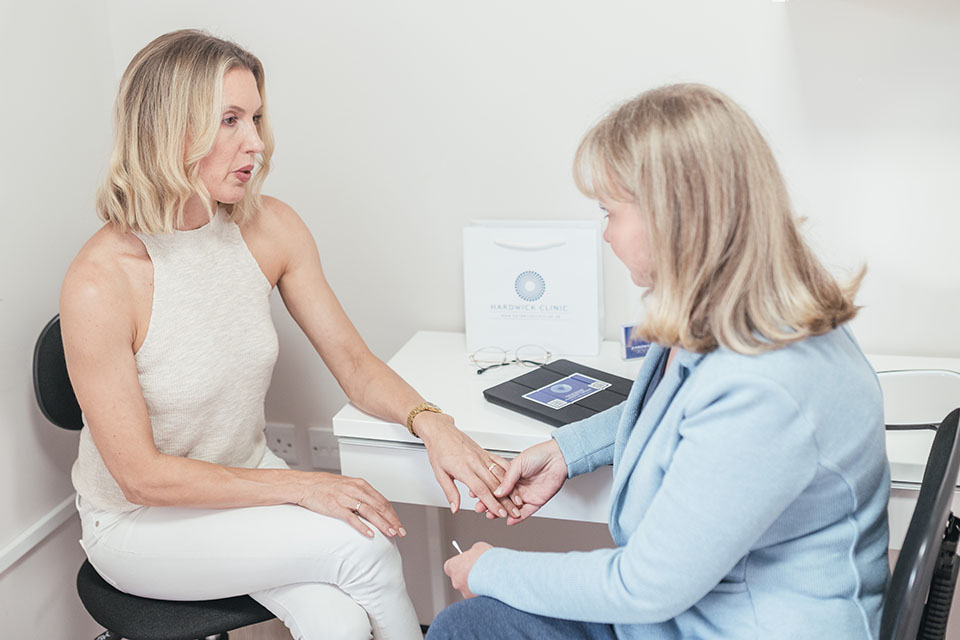
“I start with a full assessment of the hands during consultation, looking at skin quality, vein and tendon visibility, and the extent of any pigmentation, before recommending a plan that might combine injectables for volume with an IPL course for pigmentation.”
Treating both areas together tends to give a more complete, natural-looking result than addressing either issue in isolation.
Whatever treatment is used, however, the single most useful thing anyone can do for their hands is wear SPF, every day, on the hands specifically, not just the face.
Hand cream with a built-in SPF is an easy way to build this into an existing routine, and it’s the one piece of advice that makes the biggest long-term difference.
Reapplying after washing your hands, which most of us do many times a day, matters just as much as the initial application.
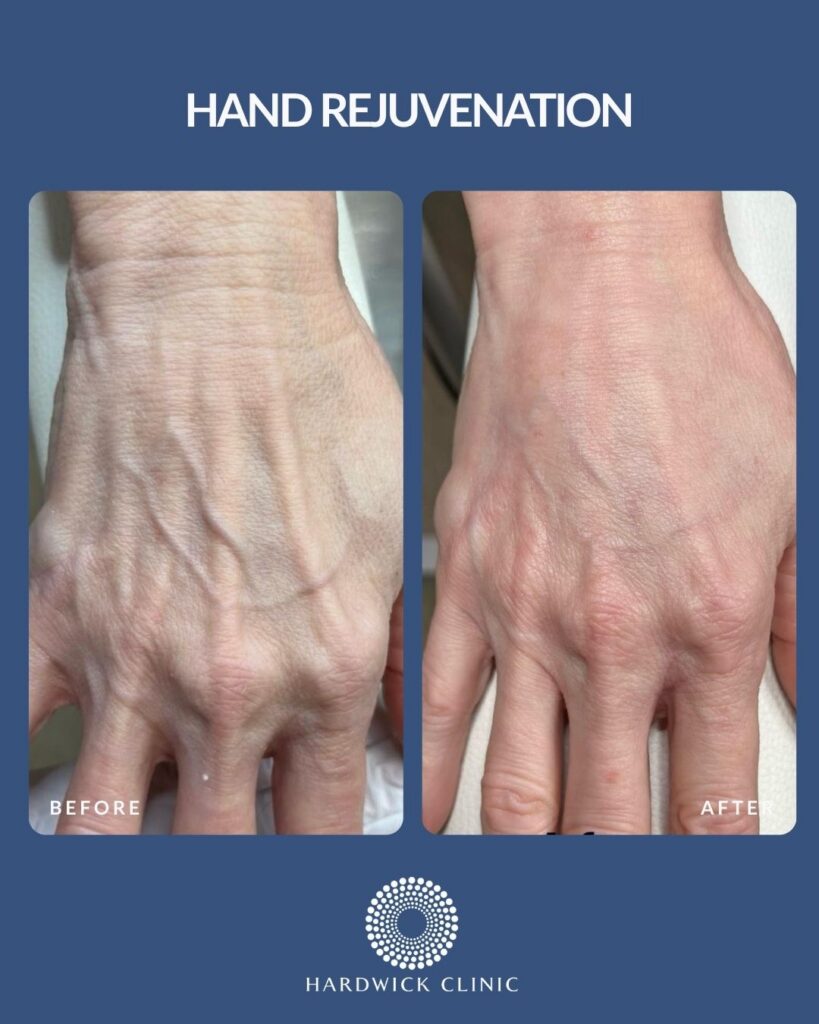
For anyone who has already invested in facial rejuvenation, treating the hands is often the missing piece. It’s a small addition to an existing skincare or treatment routine that brings the rest of the picture into line, so the hands don’t give away what the face no longer shows.
If you’d like to talk through your options for hand rejuvenation, book a consultation with Dr Tatyana Lapa-Enright at Hardwick Clinic to discuss what would work best for you.

Hardwick Clinic, 227 St Neots Road, Hardwick, Cambridge, CB23 7QJ
Text us on 07501 331191 or call us on 01223 944 654
**Results and pictures are indicative only. Actual results may vary from patient to patient© 2026 Hardwick Clinic | Terms & Conditions | Website by the Web Marketing Clinic